
Run the whole restaurant from one screen
Orders, kitchen, payments, and insight in one AI-powered flow — so the front of house moves faster and the kitchen never guesses.
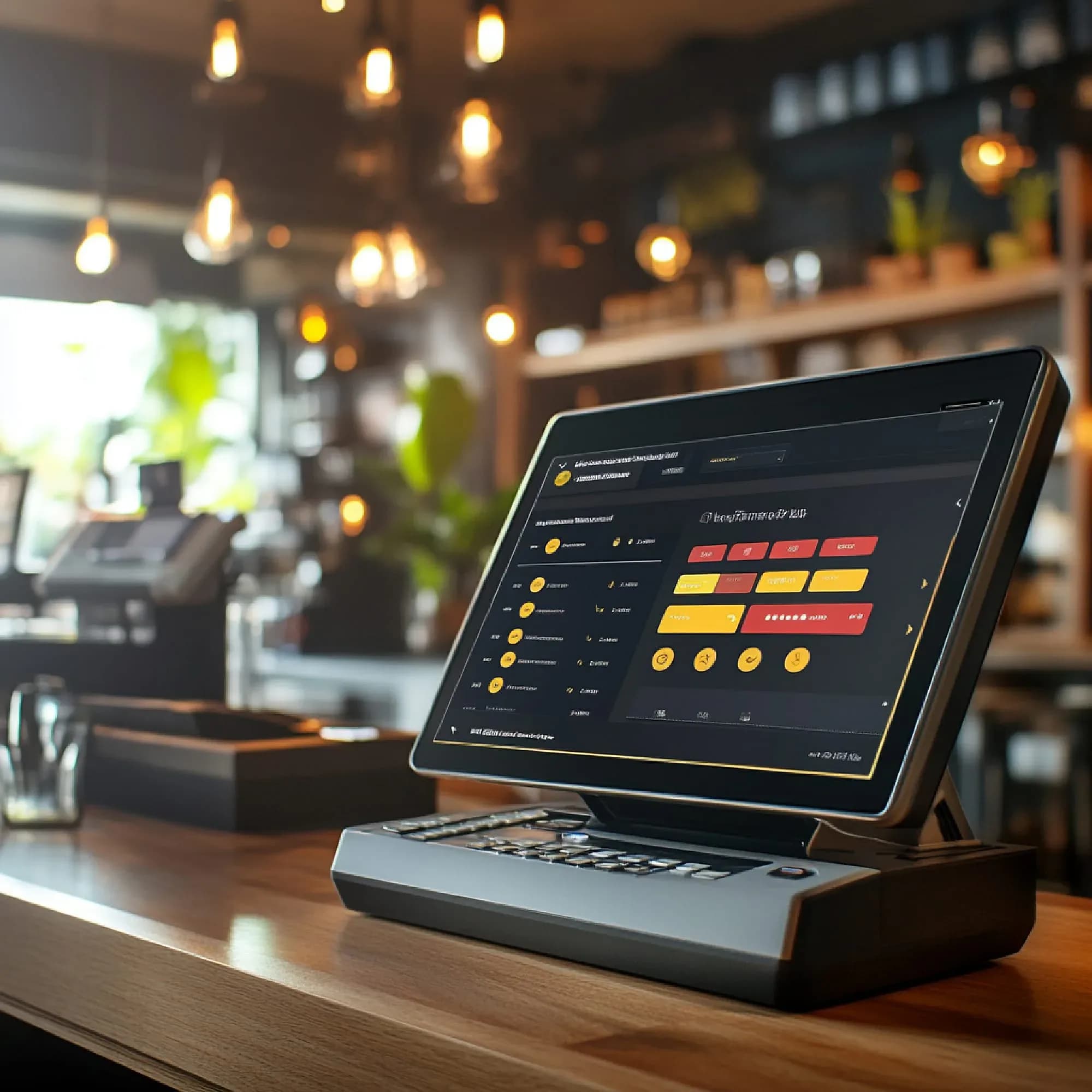
Restaurant technology that survives a Friday night
A restaurant is two businesses stapled together. Out front, hospitality runs on seconds — how long a guest waits to order, how long a check takes to close, how quickly a table turns. In back, manufacturing runs on accuracy — the right plate, at the right temperature, in the right order, with the allergy note attached. Most restaurant software is good at one side and merely present on the other, which is why so many kitchens still run on printed tickets while the front of house runs on a tablet.
The gap between those two halves is where money leaks. A modifier missed at the counter becomes a remade plate, a comped check, and a guest who does not come back — three costs from one keystroke, none of which appear on a sales report as an error. Restaurants operate on thin margins with food and labour as the two largest line items, so the cost of a re-fire is not the food alone; it is the covers the kitchen did not turn while making it twice.
Merilsoft closes the gap by treating the order as one object from the moment it is spoken to the moment it is paid for. Pacific POS captures it against a real model of your menu, the kitchen display routes it to the station that cooks it, payments and tips settle against the same ticket, and inventory decrements as it goes. Nothing is re-keyed between systems, because there is only one system.
That applies whether the order arrives at a table, at a counter, through a QR code, or as takeout. Dine-in, pickup, and delivery run through the same flow rather than three screens that reconcile at the end of the night — which is the difference between a manager closing out at 11pm and a manager closing out at 1am.

What gets in the way in restaurants
Order errors cost twice
Every mis-keyed order wastes the food and the guest's patience — and the covers your kitchen could have turned while remaking the plate. Menu-aware capture checks the ticket at the counter, where a fix is still free, instead of at the pass, where it is not.
Rush hours overwhelm the counter
A slow POS backs up the line, and the line is the ceiling on your covers. One-tap ordering, saved modifiers, and QR table orders let guests and staff move at the pace the rush actually demands rather than the pace the software allows.
You find out at month-end
Last month's P&L cannot tell you that Tuesday dinner was overstaffed or that a top-selling dish quietly stopped covering its food cost. Live dashboards put sales, item mix, and staffing pressure in front of you during the shift, when there is still something you can do about it.
Five weeks in a family-owned dining room
The deployment behind this page is written up as our family-owned restaurant case study: a single-location dining room that ran its counter on hand-keyed orders and a paper ticket walked back to the kitchen. The first two weeks went into digitising the menu — every dish, size, modifier and combo rule the kitchen honours, most of which existed only in the owner's head. That schema is what lets order entry catch a contradictory ticket at the counter instead of at the pass.
Rollout was sequenced around the nights that carry the restaurant. A soft pilot ran across two slower weeknight services with the paper tickets still on standby, the first Friday rush followed, and delivery-app orders were folded into the same queue in the final week. The owner now sets prep from the previous night's dashboard rather than from memory, and the study records kitchen re-fires from mis-keyed orders dropping to a rare exception.
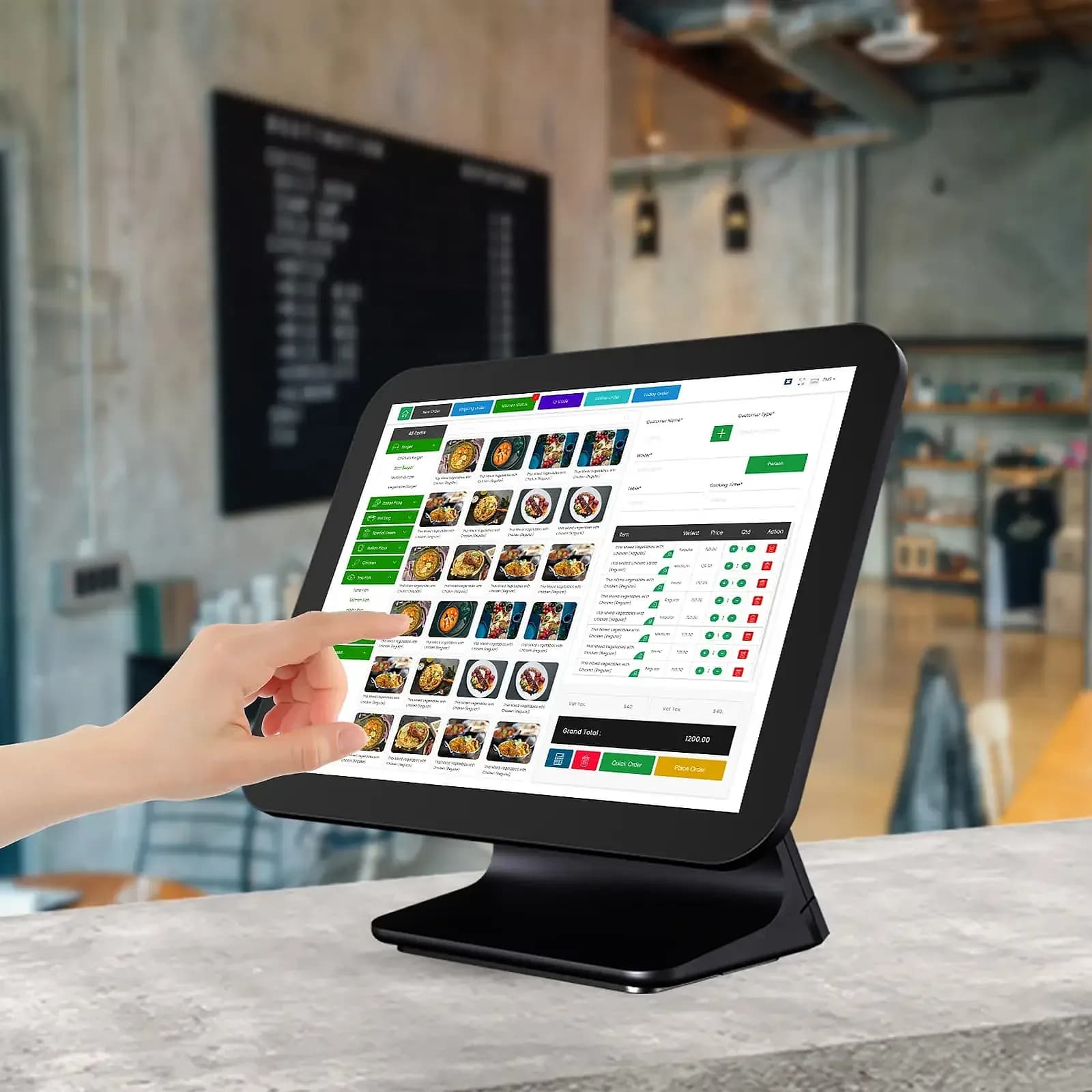
What we run in restaurants
Described in operational terms rather than feature names — what it does on a working day.
Menu-aware order capture
The POS holds a real model of your menu — items, required choices, modifier trees, combos, and allergens — so it can flag a ticket that is missing a temperature or carries an impossible combination before it is ever sent.
Kitchen display routing
Tickets route to the station that cooks them, with timing and allergy flags travelling alongside. Grill sees grill, fry sees fry, and the expo screen shows the whole cover so plates land together instead of in the order they were fired.
Dine-in, takeout, and delivery in one flow
QR table ordering, counter service, and off-premise orders all become the same kind of ticket in the same queue. There is no second tablet to watch and no end-of-night reconciliation between channels.
Payments, split checks, and tips
Cards, contactless, and cash settle through PCI-compliant Worldpay and Verifone rails, with split bills handled at the table rather than recalculated at the register.
Inventory that moves with the menu
Stock decrements as dishes sell, so the count reflects what the kitchen actually used. Low-stock alerts and one-tap reorders replace the walk-in clipboard, and 86'd items can come off the menu everywhere at once.
Service-hour reporting
Sales, margins, top items, and staffing pressure stream to a dashboard you can read from the office or the parking lot — the same numbers your closing manager sees, at the same moment.
Pacific POS was built for this
AI-powered ordering, kitchen display routing, and payments in one system — live in your restaurant in about 10 minutes. One owner calls the difference dramatic.
AI-powered point of sale for restaurants and retail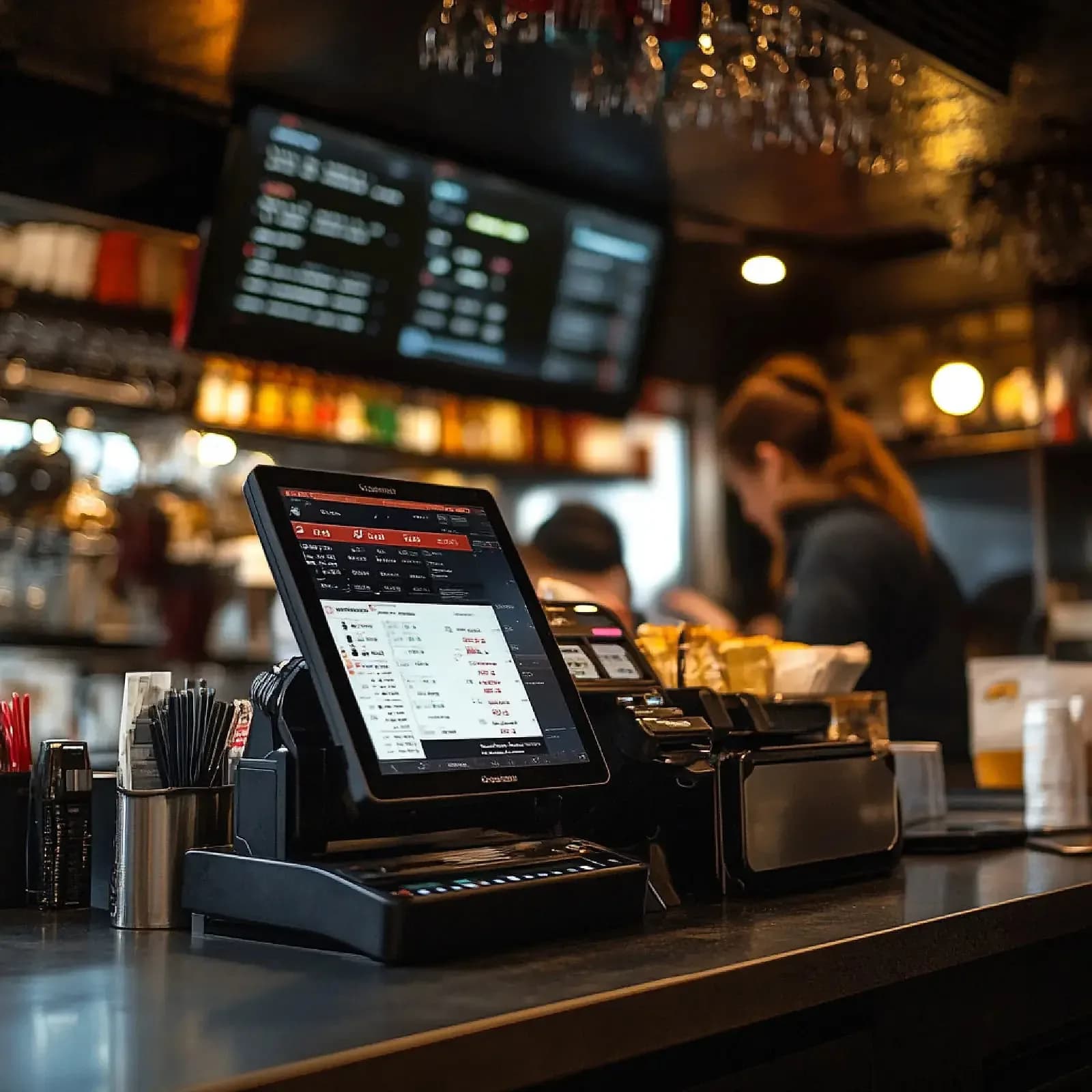
One service, end to end
The same order object, from the door to the deposit — here is where each part of the system does its work.
- Open
Counts and prep
Yesterday's sell-through sets today's prep list. Stock levels carried over from last night's service are already on the dashboard, so the kitchen preps against real depletion rather than a guess.
- First covers
Orders enter once
A server taps the order, or a guest scans the QR at the table. Either way it becomes the same ticket, validated against the menu model before it is fired.
- Rush
The kitchen keeps its own pace
Tickets land at the stations that cook them with allergy flags attached. Expo sees the whole cover. Nothing is shouted, and nothing is read off a curling printer roll.
- Turn
Checks close at the table
Split bills, tips, and contactless payment happen where the guest is sitting, which is the part of the turn most restaurants lose the most minutes to.
- Close
The night reconciles itself
Sales, voids, tips, and inventory movement are already reconciled because they were never separate. The closing report is a read, not a rebuild.

What to ask any restaurant POS vendor
Every vendor's feature grid has the same boxes ticked. These are the questions that actually separate them — ask us the same ones.
How long from menu file to first ticket?
Ask for the number in minutes, not a range in weeks. A vendor who answers in weeks is describing their architecture: on-premise installs and manual data entry. Pacific POS answers with about ten minutes, and the four steps are published.
Can it model your menu, or only your buttons?
Bring your most awkward item — the build-your-own, the half-and-half, the combo with a required side — and make them enter it live. A grid of buttons will fake it; a real modifier tree will not need to.
Does the kitchen see what the guest ordered?
Ask how an allergy note reaches the fry station, and what the expo screen shows. If the answer involves a printer, you are buying a front-of-house system with a kitchen bolted to it.
Is off-premise a second system?
Takeout and delivery handled on separate tablets means separate reports, separate reconciliation, and separate mistakes. One queue is a materially different operation at 7pm on a Friday.
What does year two cost?
Add the subscription, the payment processing margin, hardware you would be locked into, and the support tier that actually answers. The cheapest first-year sticker is regularly the most expensive three-year decision.
What happens when the internet drops?
Ask the vendor to unplug the router mid-demo and keep taking orders. Most restaurant Wi-Fi was never built to be load-bearing, and the honest answer is a local queue that keeps tickets reaching the kitchen and syncs back when the line returns. Ask what happens to card payments in the same minute, because those are two different failures.

What we deploy for restaurants

“Merilsoft's restaurant ordering system completely transformed how we manage orders and enhance customer experience. The AI-driven interface is intuitive, fast, and has dramatically reduced errors.”
Restaurants, answered
The questions operators actually ask before booking a demo.

Not seeing your question?
Tell us how you run today and we'll answer specifically.
Let's talk about your restaurants operation
Tell us how you run today — we'll show you exactly what changes.
Or call us: 1-225-573-9244