
Software built like a product, not a project
Our software development services deliver custom applications tailored to your business needs. We specialize in web, mobile, and enterprise solutions, covering the full development lifecycle — from strategy and design to development, testing, and deployment — ensuring scalable, efficient, and high-performing software that drives growth.

Why we build like a product company

The difference between an agency and a product company shows up about six months after launch. An agency's incentive ends at handover — the deliverable is accepted, the invoice clears, the team moves on. A product company lives with its decisions, because every shortcut taken in month two becomes a support ticket in month eight. That is a far more reliable guarantee of quality than any statement of values.
Merilsoft is a product company that also builds for clients. The engineers who write and operate Pacific POS — software running live transactions in real businesses — are the same people who build custom applications for our clients. Our defaults come from that: documentation because we have had to read our own, tests because we have had to change code we wrote two years ago, monitoring because we have been the ones paged when it broke.
What that means in practice is that we optimise for the second year rather than the launch date. A system that ships two weeks earlier and cannot be changed afterwards is a bad trade, and it is one that is very easy to make when nobody involved will still be there to pay for it.
It also means we will argue with a requirement. The most valuable thing we do on some projects is talk a feature out of scope — not to reduce our own work, but because complexity you do not need is complexity you maintain forever. A partner who agrees with everything is optimising for the contract, not for the software.
Before and after custom software development
Described as friction removed rather than features added — and deliberately without figures, because we hold measured results for one deployment and it is not a services engagement.
Today
The launch date arrives, and afterwards the software cannot change without breaking
With custom software development
Product-company defaults — tests, documentation, monitoring — so year two is cheaper than year one, not dearer
Today
Status reports say eighty percent done, for months
With custom software development
Weekly demos of working software you can open, use, and steer
Today
The agency leaves and takes the knowledge with it
With custom software development
Your repository, your documentation, your ownership — transferred as part of the engagement, not negotiated after it
A logistics startup's first product
A logistics startup came to us running dispatch on paper and phone calls, and left with a working application their drivers actually use. The engagement ran discovery to launch — scope written down where it could be argued with, weekly demos, and a cutover that did not stop a single delivery.
It is the shape most first builds should take: a focused version shipped in months, then extended from what real usage taught rather than from what the original specification guessed.


Typical deliverables
Every engagement is scoped to your goals — these are the shapes it usually takes.
Custom application development
Web & mobile development
Enterprise software solutions
Software testing & quality assurance
API design and third-party integrations
Legacy system modernization
What the engagement actually involves
Described in operational terms — the parts that decide whether this succeeds.
Web applications
Server-rendered and single-page applications built on modern React and TypeScript foundations, with the accessibility and performance work treated as part of the build rather than a phase that gets cut.
Mobile applications
Cross-platform apps that share a codebase without feeling like a website in a wrapper — offline behaviour, push, and device integration designed in from the start rather than retrofitted.
APIs and integration
The integration surface is where most enterprise projects actually get hard. We design APIs to be versioned and consumed by people who cannot ask us questions, and we integrate with the systems you already run rather than proposing to replace them.
Legacy modernization
Incremental replacement of systems that still work but can no longer change. Strangler-pattern migrations keep the business trading while the software underneath it is replaced piece by piece.
Testing and quality assurance
Automated test coverage on the paths that carry money or data, plus the manual exploratory testing that catches what assertions never do. The goal is a codebase your next developer can change confidently.
Production operations
Logging, monitoring, and alerting so you find out about problems from a dashboard rather than a customer — plus a deployment process boring enough to run on a Friday.
Who lives with the result
Not who we staff — who on your side opens it on a Monday.
The founder or product owner
Gets a partner who argues a feature out of scope when it deserves it, and a product that can be demonstrated to investors while it is still being built.
The operations lead
Gets software shaped around how the work actually flows — discovery interviews the people who do the job, not only the people who bought the system.
The next developer
Inherits a documented, tested codebase they can change with confidence — the audience most builds forget, and the one that decides the software's lifespan.

The engagement, step by step
Discovery
A short call to understand your goals, users, and constraints — then a concrete proposal with scope and timeline.
Design
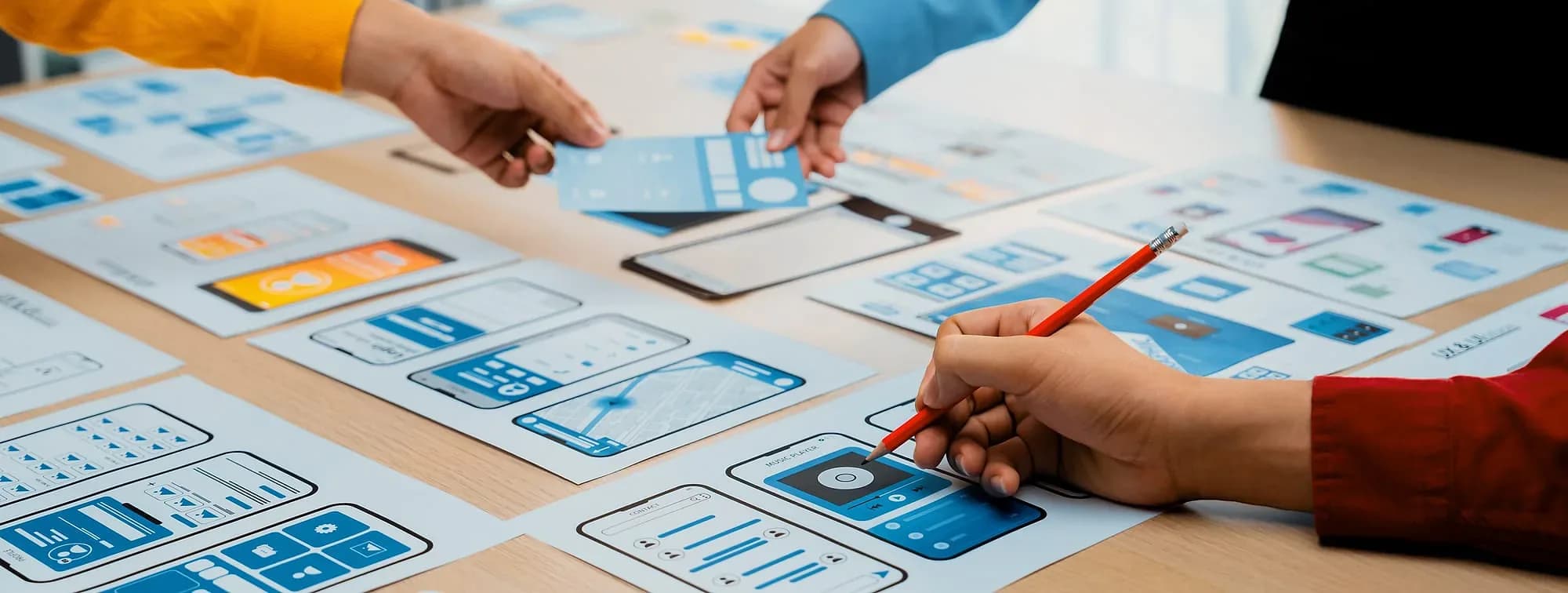
Wireframes and clickable prototypes so you see the product before a line of code is written.
Build
Iterative development with weekly demos — you watch the product take shape and steer as it does.
Launch & support
Production deployment, training, and a support plan that keeps the software improving.
Three ways this is usually bought
If none of these fit, say so on the call — the shape is negotiable.
Fixed-scope build
A defined product delivered against an agreed scope, timeline, and price. Discovery produces the scope; changes after that are handled as explicit change requests rather than absorbed silently.
Best forA first version with clear boundaries
Iterative product partnership
An ongoing engagement where priorities are set every sprint and the roadmap is allowed to change as you learn. Weekly demos are the control mechanism rather than a signed specification.
Best forProducts that will keep evolving
Takeover and modernization
We assess an existing codebase — what is tested, what is documented, what would need to change — and then either continue it or replace it incrementally. The assessment comes first and is worth having on its own.
Best forSoftware you inherited or outgrew
The things that actually change hands
Chosen per engagement rather than by habit — and named in categories, not brands we happen to resell.
Front end
- TypeScript
- React
- Next.js
- Tailwind CSS
- React Native
Back end
- Node.js
- Python
- REST & GraphQL APIs
- PostgreSQL
- Redis
Infrastructure
- AWS
- Docker
- CI/CD pipelines
- Infrastructure as code
- Observability tooling
Where this service is run
The systems it pairs with, and the sectors that buy it most.

Custom Software Development, answered
What buyers ask before the first call — including the answers that lose us work.

Not seeing your question?
Tell us how you run today and we'll answer specifically.
Start a custom software development conversation
A 30-minute call is enough to know if we're the right team. No pressure, no boilerplate proposal.
Or call us: 1-225-573-9244